Definition of the Value proposition
There are many definitions of a value proposition. It basically comes down to the following:
A value proposition is the concrete message or brand promise of a product / service to a target group. It describes the value (experience, monetary reward, problem solving) that a company promises to deliver to the customer.
Differentiates and connects customer and solution
The value proposition is the foundation for differentiating a company from competitors. Explains how to solve customer’s problems or improve their situation. Can be for a:
- Company
- Brand
- Product
- Client
Taps into the opportunities in the market
The value proposition translates the customer needs / insights to a suitable solution (product / service) for the customer.
Provides the basis for communication
The value proposition can be translated in a clear and catchy message and made tangible with concrete evidence for marketing / communication.
Background
Key to success
The value proposition largely determines the success of the organisation. It can be used for internal and external purposes. Internally, it helps the organisation focus and be aligned when having a good value proposition. Externally, a good value proposition supports sending aligned communication and attracting the right customers.
Building customer relationships
The art of temptation is sufficient when a company wants to sell a product solely once to a customer. More is needed to create a long-term customer relationship, a promise for now and the future. A promise with good products and suitable service on which the customer can count.
Standing out of the crowd
Nowadays (potential) customers get overwhelmed by advertisements and propositions via smartphones, TV, radio and other offline media. Reaching customers is no longer the main challenge, anyone can simply send an email or buy advertisement on Facebook. The core challenge is to be heard (or read). Consumers gained skills in quickly scanning all information they receive. It is therefore important that they grasp the key of an organisation’s message within seconds. A good value proposition with clear message helps customers to reach and engage their customers.
Terminology
There are a couple of terms that are often interchangeably used: product, value proposition and positioning.
Product versus proposition
A product / service has the purpose of serving a need. A value proposition is the value that the product / service gives to the customer and includes the promise and solution to the customer’s problem.
Positioning versus proposition
Positioning is the position a brand wants to take in the brain of a target group, compared to other brands. This is often long-term focused. For example, positioning on lowest price and best service. The positioning is on a higher and more abstract level than a proposition. The proposition is a concrete message and promise.
Level of a value proposition
A value proposition can de developed for different levels: organisation, label or product. The first step for an organisation is to choose which level they want to choose. The proposition can be conveyed via e.g. promise, solution to a problem or commercial slogan.
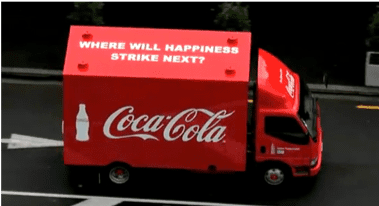
Coca Cola translated its proposition to its slogan: The World of Happiness. It is its
brand proposition. In all its communication there is a link to its proposition. It even opened a world of Coca Cola theater in Atlanta (USA).
 Sending aligned communication and attracting the right customers
A strong, recognizable proposition defines a clear target market with needs, a clear offer with pricing and a clear promise for sales and service. The customers should be able to identify themselves with the proposition and feel attracted by the proposition. The proposition must entice customers to shop with the company or at least orientate themselves about the company and its products.
Provide focus and aligned activities within the organisation
At the same time the proposition functions as an internal guideline. The proposition states for which customers the product is most suitable. Thus, every employee can offer and sell the right products and services to the most valuable customers. The end result should be long lasting, lucrative relationships with satisfied customers by delivering on the promises to customers each and every day.
Organisational challenge
The challenge for every company is to deliver on its promises to customers daily. To achieve this the proposition must be embedded in the organisation, embedded in a way that every employee will bear the proposition in mind during daily activities.
Proposition
The proposition is the true essence of the offer of the organisation to customers. The proposition contains the following elements:
Target group – for who are our products and services intended?
Customer insight & need – what keeps the customer awake at night and why do customers need our products and services?
Promise – what can customers always rely on from our organisation?
Benefits – what are the functional and emotional advantages of our product / service for the customer?
Evidence – which proof do we have of our promise, offer and benefits?
Each element is further explained below.
Target group
A target group is specific group of customers that a company wants to sell its products and services to. A target group is a clearly defined group of customers with similar characteristics that distinct them from other customers. The aim is to serve the specific needs of the target group. Choosing a target group might seem easy. But the choice of a target groups influences many marketing decisions you make later on in your marketing planning.
Target groups are often defined by organisations based on socio demographical characteristics. However, more effectively is defining target groups based on needs. The socio demographic variables then can be used to describe the target customers, in order to define the way to approach them.
A well-chosen target group has needs the organisation can serve, is large enough to be financially interesting and last but not least, the target group should be accessible for the organisation. For example, an organisation that offers VIP limousine services should have a VIP network.
A well-delimited target group based on needs makes targeting prospects easier and more effective, as the proposition that is to be developed for this group then can be based on this very same need.
Triggering questions
- For who are our products and services intended?
- What characterises customers within the target group?
- What do the customers have in common?
- What differentiates this target group from other people?
- Is this group the most likely to buy our product / service?
Customer insight & needs
A customer insight is an interpretation of trends & developments in consumer / human behavior. A customer need is more specific. Customer needs are wants or problems that customers seek to fulwill / solve by buying a product or service. For example, in the car industry a customer insight is that more people are demanding flexible contracts instead of owning a car. A customer need of the target group young professionals is that they want 3 year lease contracts for cabrio’s and proactive service messages about the progress of their contract. The more specific the needs the better an organisation can serve those needs and communicate their solution.
Triggering questions
- why do customers need our products and services?
- What keeps them awake at night?
- Which basic requirements do they have?
Promise
A promise is the statement of the organisation to deliver a specific product / service / experience in the future. The more specific the promise, the better a customer knows what to expect. A promise also helps to entice the customer as it creates a ‘dream’ for the customer about something he will receive or experience in the future. This is more tangible than solely promoting the product / service and waiting for the experience. It is key that the organisation lives up to its promise. Sky castles are easily build, but very hard to deliver. The promise is directly linked to the need of the customer. An unrelated promise will not resonate in the target segment. For example, personal investment advice 24/7 that monitors your funds so you can relax and focus on other important things in life will not be very effective when the need is to have self control over the funds. Finally, a promise should be clear and simple to understand.
Triggering questions
- What can customers always rely on from our organisation?
- What is the experience your customers will get?
- Which problem do you solve?
Benefits
Benefits are the advantages the customer will experience by buying the product or service. There are two types of benefits:
Functional benefits – benefits based on product or service characteristics (e.g. ‘A prepaid phone contract that allows making calls to one specific number, even if you’ve reached the limit in your account’)
Emotional benefits – feelings and emotions (e.g. ‘The secure feeling that your child can always call you’)
The benefits a customer receives and perceives might differ per segment. For example, a backseat-TV-system in a car can be a functional benefit for families but not for single drivers.
Triggering questions
Functional
- Which features can be perceived as benefits?
- Which features serves a need or solves a problem for the customer?
Emotional
- Which self expressed benefits do our services have?
- Which emotion will the product / service generate?
Evidence
The evidence provides proof of the promise. The proof can consist of various elements such as customer satisfaction scores, name of satisfied client (B2B), awards etc.
The key is that the evidence is linked and supports the promise. A well-proven promise strengthens the message while a mismatch might create confusion at best. Example of a mismatch, using best employer 2016 as evidence for personal investment advice 24/7 that monitors your funds so you can relax and focus on other important things in life.
Triggering questions
- What are our accomplishments?
- What do current customers say about us?
- What compentencies do we have?
Developing a good proposition
A good proposition is relevant, recognizable and trustworthy. Relevant because it must address the customer’s needs, recognizable / distinctive because it must attract customers and be trustworthy because it must convince customers.
Determining whether the proposition is good
A good value proposition contains the earlier mentioned elements (a.o. promise) and is relevant, recognizable and trustworthy. An organisation can test its proposition by asking customers via interviews and/or focus groups. But at the end of the day the real proof of the pudding is when implemented. If the proposition resonates well in the market and targets the intended target group, it can be concluded the proposition is good. A proposition that is not optimal will create questions, brand noise and not support sales.
A solid and good value proposition:
Relevant
- Appeals to customers
- Sustainable message by adapting to trends and developments
Recognizable / distinctive
- Compelling, distinctive and differentiates the company from the competition
- Consists of 1 core idea / main message that is loud and clear
Trustworthy
- Reliable information and proof
- Transparent, clear and simple to explain.
A good value proposition
Is
Relevant
and
Recognizable / distinctive
and
Trustworthy